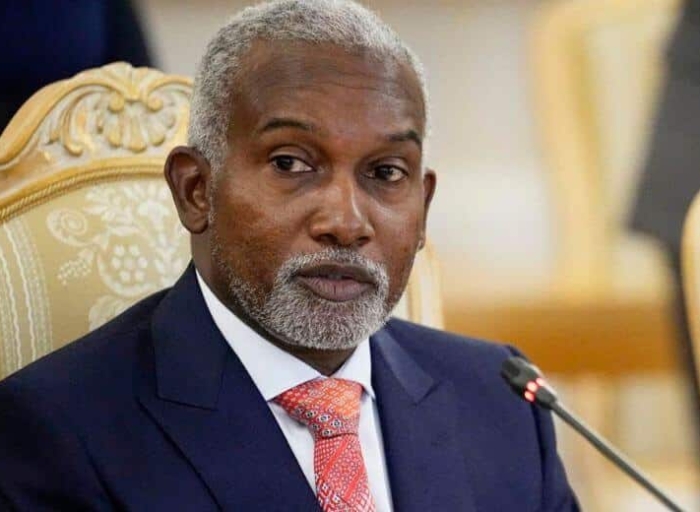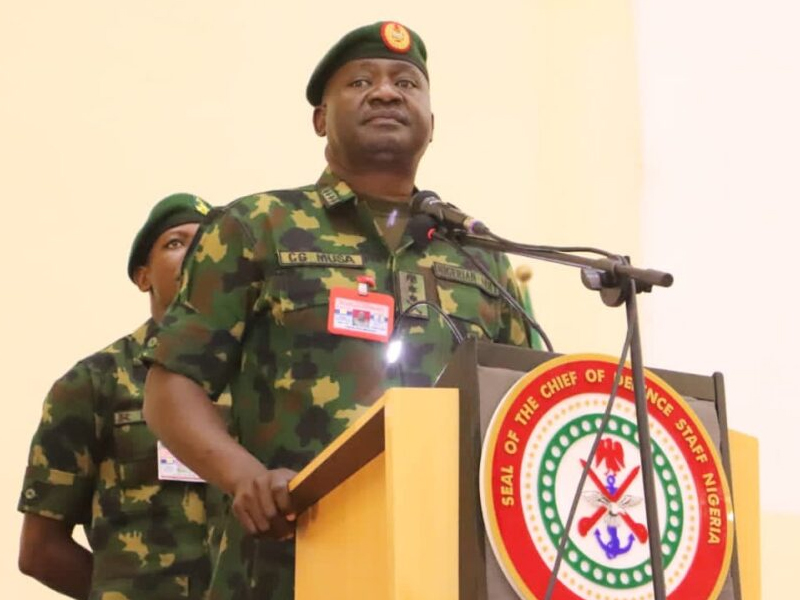
Nigeria’s Minister of Defence, General Christopher Musa, has firmly stated that the country must halt all forms of negotiation and ransom payments to terrorists, warning that such actions only empower criminal groups and worsen insecurity.
Appearing before the Senate for his ministerial screening, Musa cautioned that ransom payments enable terrorists to reorganize, buy more weapons, and launch fresh attacks. He noted that communities that previously paid or negotiated still ended up being attacked, proving that such deals offer no real safety. He added that Nigeria’s financial system is capable of tracking suspicious transactions if the right technologies are fully deployed.
Musa stressed that military force alone cannot end insecurity, explaining that direct combat contributes only about 25–30 percent of the overall solution. He pointed to poverty, lack of education, weak governance, and ineffective local government structures as major drivers that fuel criminal activity. He urged state and local government authorities to take the lead in intelligence gathering and early response, saying security agencies cannot shoulder the full responsibility.
He also expressed deep worry over Nigeria’s slow judicial process, especially terrorism and kidnapping cases that drag on for years without resolution. Musa called for urgent reforms such as special terrorism courts, tougher punishments and faster trials to strengthen national security.
The minister raised alarm over rising criminal activities along coastal routes connecting Akwa Ibom to Cameroon, including piracy, sea robbery and coastal kidnappings. He confirmed that Operation Delta Safe is expanding into previously stable zones that are now facing new threats.
Musa further called for a complete ban on illegal mining, describing it as a major financial lifeline for armed groups hiding in forest regions.
He revealed plans to reduce the number of military checkpoints nationwide so that more troops can be redeployed to forests and ungoverned spaces where criminal groups hide. He emphasised that securing access to farmlands is critical, as food security is central to the country’s stability.
“A hungry man is an angry man. If we protect farmers, we are protecting the nation,” he said.
Musa disclosed that although more than 70,000 Nigerians apply for military recruitment every year, many applicants refuse deployment to conflict zones. He explained that a unified national database would help verify identities, eliminate recruitment fraud and make it easier to track criminals across state lines.
He described Nigeria’s scattered data systems—spread across immigration, quarantine and other agencies—as a major weakness exploited by terrorists, kidnappers, cybercriminals and illegal miners. Musa called for the creation of a single national database to streamline tracking, disable crime-linked accounts and strengthen intelligence operations.
Following a three-day special debate, the House of Representatives adopted wide-ranging national security reform recommendations. Lawmakers urged transparent and open prosecution of all terrorism-related cases, saying this would help reduce violent crimes and rebuild public confidence.