Nepal is in turmoil after angry demonstrators stormed and set fire to the nation’s parliament building, a shocking escalation in a week marked by violent clashes, mass protests, and growing political instability.
According to Parliament Secretariat spokesperson Ekram Giri, “Hundreds of protesters broke into the parliamentary complex and torched the main structure,” as security forces struggled to contain the chaos.
The unrest began on Monday after the government imposed a sweeping ban on 26 popular social media and messaging platforms. Authorities argued that the ban was necessary to maintain order, but it quickly sparked outrage among young people who rely heavily on these platforms for expression, communication, and activism.
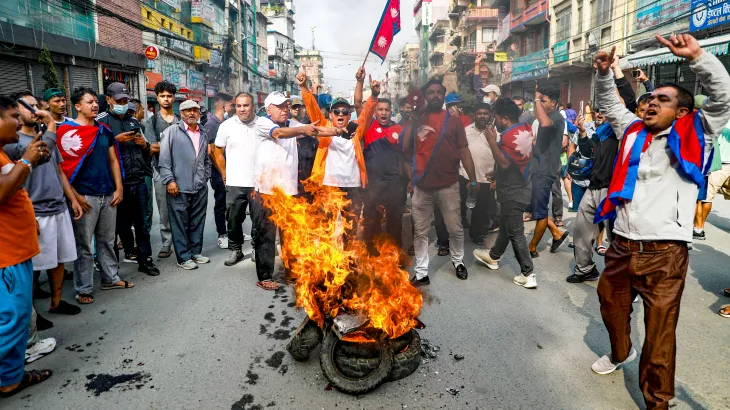
The move backfired dramatically. What started as anger over digital restrictions has spiraled into a broader movement, widely dubbed the “Gen Z protests.” Thousands of young Nepalese took to the streets, not only opposing the social media ban but also voicing frustration at years of government corruption, lack of accountability, and dwindling economic opportunities.
The protests have been deadly. At least 19 people have lost their lives, while more than 200 others have been injured in clashes between demonstrators and security forces. Under mounting pressure, the government eventually lifted the ban on social media apps, but by then the protests had already evolved into a larger political rebellion.
Adding to the crisis, reports confirm that some ministers have started resigning from their posts, signaling cracks within Nepal’s leadership as the unrest intensifies.
With public anger showing no signs of slowing down, Nepal now faces one of its most severe political and social upheavals in recent years — a reminder of the growing power of youth-led movements and the risks governments face when attempting to silence them.